Organic Lead Generation Morris County New Jersey: Build Sustainable Growth Without Paid Ads
In Morris County, NJ established businesses compete for the same local customers every day. Digital Marketing lead gen creates steady customer flow through search rankings, content, and local visibility. Most businesses see meaningful traffic and qualified leads within 90–120 days; consultation available to assess your current position. We build lead generation strategies, assets you own, not rented ad space.
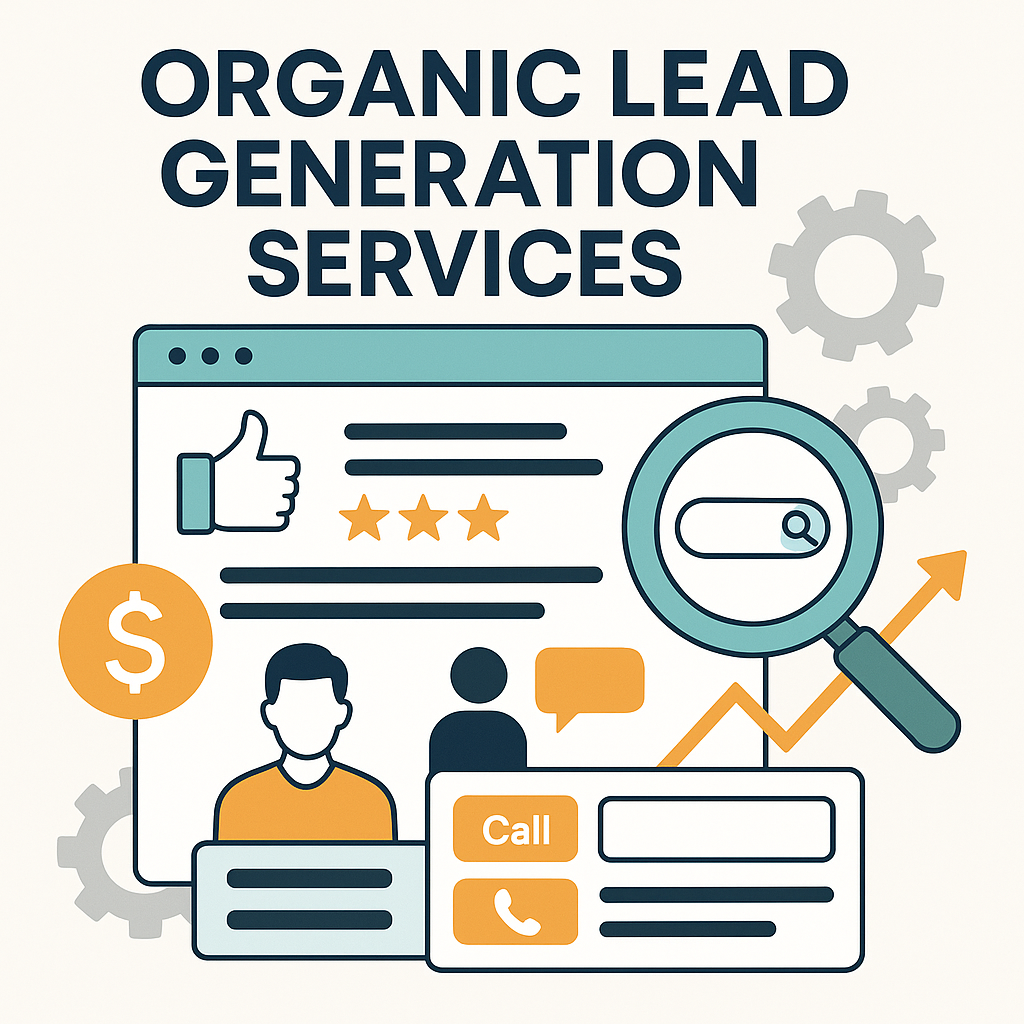
What is Organic Lead Generation in Morris County New Jersey?
NJ Organic lead gen attracts customers through unpaid methods like search rankings and content.<sup>1</sup> You build visibility without paying for each click or impression. Unlike paid advertising where costs never stop, organic methods create compounding returns.
Three core methods drive results for local businesses:
- Rank for searches your target customers use daily when looking for services
- Optimize Google Business Profile for map pack visibility in local search results
- Create content that answers questions prospects ask before buying
These leads cost time upfront but compound over months and years. Your investment builds digital assets that continue working long after creation. The difference between organic and paid is ownership—you own your content, rankings, and optimized profiles permanently.
How Organic Lead Generation Works Through Search Visibility and Content That Answers Customer Questions
Service businesses rely on local customers finding them when they need help. Potential customers discover your business exactly when they search for solutions you provide. Your website and Google Business Profile appear in search results for relevant service terms.
Residents in Morristown, Parsippany, Madison, and surrounding areas search “[your service] near me” hundreds of times monthly. Organic rankings capture that intent at the precise moment someone needs your services. This timing creates higher-quality leads than interruptive advertising because prospects are actively seeking solutions.
Search visibility works through multiple channels simultaneously. Your website ranks for service-related questions, your Google Business Profile appears in map results, and your content answers specific questions prospects research before contacting businesses. Each channel reinforces the others, creating multiple pathways for customer discovery.
The content you create serves dual purposes: it ranks in search engines and educates prospects about your services. Educational content builds trust before the first conversation, shortening sales cycles and improving conversion rates. When prospects understand your value before contacting you, they arrive more qualified and ready to move forward.
Morris County Businesses Generate Organic Leads Using Local SEO, Google Business Profile, and Strategic Content
Established businesses competing in Madison, Denville, Randolph, and other local townships need multiple discovery channels working together. Relying on a single channel creates vulnerability—algorithm changes or increased competition can disrupt your lead flow overnight.
Three channels working together create resilient lead generation:
Local SEO places you in map results when prospects search for services in their area. Map pack rankings (the top three results in Google Maps) generate the highest click-through rates for local searches. Businesses appearing in map results receive significantly more calls and direction requests than those appearing only in organic listings below.
Google Business Profile optimization gets reviews, photos, posts, and complete information working to build credibility and improve rankings. An optimized profile signals to both search engines and prospects that your business is active, trustworthy, and ready to serve customers. Regular updates, fresh photos, and consistent review responses all contribute to better visibility.
Strategic content ranks for questions customers ask throughout their research process. Different content targets different stages of customer awareness—some content captures prospects just beginning their research, while other content targets those ready to make buying decisions. This diversity ensures you’re visible throughout the entire customer journey.
The area’s educated population researches thoroughly before contacting businesses. Content that educates converts better than traditional sales copy because it matches how modern buyers make decisions. Prospects want to understand their options, compare approaches, and feel confident before reaching out.
Service area businesses should create location-specific pages for neighborhoods where customers search for nearby providers. Separate landing pages for Parsippany, Madison, Morristown, Denville, and Randolph capture hyperlocal search volume competitors miss. Each page addresses specific neighborhood concerns and demonstrates local expertise.
Organic Methods Build Long-Term Value While Paid Ads Stop When Budget Runs Out
Business owners who spent $2,000-$5,000 monthly on Google Ads often see inconsistent results or unsustainable cost-per-lead. Paid advertising requires continuous spending to maintain results. The moment you pause campaigns, lead flow stops completely.
Content and rankings you build continue generating leads months and years after creation. A well-optimized article published today can drive qualified traffic for 24-36 months without additional investment. This creates asymmetric returns—initial effort generates ongoing benefits far exceeding the original input.
Initial investment in SEO and content pays dividends for 12-36 months minimum. Cost per lead decreases over time instead of increasing like paid advertising. As your content library grows and domain authority strengthens, each new piece of content ranks faster and generates results more quickly.
Local service businesses typically see organic leads cost 60-70% less than paid leads after the first six months. This cost advantage increases over time as organic assets accumulate. Businesses investing consistently in organic methods build sustainable competitive advantages that become increasingly difficult for competitors to overcome.
The compounding nature of organic lead generation creates exponential growth patterns. Early months require more investment relative to results, but momentum builds as content accumulates, rankings improve, and domain authority increases. Businesses that persist through the initial 4-6 month ramp-up period see accelerating returns in months 7-12 and beyond.
Digital marketing strategies that combine owned assets (your website and content) with optimized third-party platforms (Google Business Profile, social media) create the most resilient systems. Diversification across multiple channels protects against algorithm changes and platform policy updates that can disrupt single-channel strategies.
Small Businesses See Organic Lead Results in Three to Six Months
Owners need a predictable path to stop bleeding money on ineffective marketing strategies. Understanding the timeline helps set appropriate expectations and maintain commitment during the initial investment period.
First organic leads typically arrive in 60-90 days after beginning optimization efforts. These early wins usually come from quick-win opportunities like Google Business Profile optimization and updating existing website content. Seeing initial results builds confidence and validates the approach.
Meaningful lead volume builds by month four to six as content gains traction and rankings improve. The progression follows a predictable pattern: month 1-2 focus on foundation-building, month 3-4 bring first measurable results, and month 5-6 show accelerating momentum.
Early wins come from Google Business Profile optimization because GBP updates take effect quickly—often within days or weeks. Improved photos, complete business information, regular posts, and review responses can boost map pack visibility rapidly compared to website content that requires more time to rank.
Content rankings build progressively as search engines index new pages, evaluate quality signals, and establish topical authority. Each piece of content strengthens your site’s overall authority, making subsequent content rank faster. The compounding effect accelerates noticeably after six months of consistent publishing.
Competitive service categories in Morristown and other densely-served areas take longer than niche services in smaller townships. Competition level directly impacts timeline—businesses in highly competitive industries should expect the longer end of the 3-6 month range, while those in less competitive niches may see results sooner.
Market dynamics also influence timelines. Seasonal businesses may see results arrive faster if beginning optimization during peak search periods. B2B services with longer sales cycles may see website traffic increase before measuring closed deals, requiring patience to see the full impact.
The key to success during the initial months is maintaining consistent effort. Businesses that publish regularly, optimize systematically, and resist the temptation to abandon the strategy prematurely see the best long-term results. The businesses that fail are usually those that stop investing just before results would have accelerated.
Google Business Profile and Location Pages Drive the Most Organic Leads for Local Services
Service area businesses target specific neighborhoods where customers search for nearby providers. Understanding which channels generate the most qualified leads helps prioritize optimization efforts and resource allocation.
Map pack results (the top three Google Business Profiles appearing in local searches) generate the highest click-through rates for location-based searches. Studies consistently show map pack results receive more clicks than traditional organic listings below them, making GBP optimization critical for local lead generation.
Optimized Google Business Profile includes complete information, regular posts, customer reviews, high-quality photos, and accurate service area settings. Each element contributes to both rankings and conversion rate—better rankings drive more visibility while complete information converts more visitors into leads.
Location-specific pages on your website capture neighborhood searches that generic service pages miss. When someone in Parsippany searches for your service, a dedicated Parsippany page ranks higher than a generic county-wide page because it better matches search intent. Search engines prioritize pages that specifically address the searcher’s location.
Creating separate landing pages for Parsippany, Madison, Morristown, Denville, Randolph, and other key service areas allows you to capture hyperlocal search volume. Each page should include neighborhood-specific content—mentioning local landmarks, addressing area-specific concerns, and demonstrating familiarity with the community.
Location pages work best when they provide genuine value rather than simply repeating the same content with different city names. Include area-specific information: local regulations that affect your service, neighborhood characteristics that impact how you serve customers, or testimonials from customers in that specific area.
The combination of optimized Google Business Profile and location-specific website pages creates multiple ranking opportunities for the same searches. You can potentially appear in both map results and organic listings simultaneously, doubling your visibility and increasing the likelihood prospects contact you rather than competitors.
Service businesses should also optimize for “near me” searches by ensuring proper schema markup, accurate location data, and mobile-friendly website design. Most local searches now happen on mobile devices, making mobile optimization essential for converting visibility into leads.
Understanding the Difference: Organic Leads vs. Inbound Leads
Business owners confused by marketing terminology need clarity on what they’re actually buying when working with an agency. Understanding the distinction helps you evaluate proposals and set appropriate expectations for results.
Organic leads specifically come from search engines through unpaid rankings. When someone finds your business by searching Google and clicking on an unpaid result (not an ad), that’s an organic lead. This definition is precise and measurable through analytics tools.
Inbound leads encompass organic search plus referrals, social media, email, and direct traffic. Any lead that comes to you (rather than you reaching out to them through outbound methods) qualifies as inbound. This broader category includes multiple channels beyond search engines.
The distinction matters when agencies report results. An agency claiming to generate “inbound leads” might be counting referrals and direct traffic you would have received anyway. Agencies promising “organic leads” should specifically demonstrate improvement in search traffic and rankings.
Businesses prioritizing SEO typically see 60-80% of inbound leads come from organic search. This dominance makes organic search the highest-leverage channel for most local service businesses. While other inbound channels contribute value, search typically drives the majority of measurable results.
Understanding this distinction also helps you identify which metrics matter. Tracking organic search traffic specifically (rather than total website traffic) shows whether your SEO investment is working. Breaking down lead sources in your CRM reveals which channels actually drive paying customers.
When evaluating agency proposals, ask specifically about organic search rankings and traffic rather than accepting vague promises about “leads” or “visibility.” Request clear definitions of how they’ll measure and report organic lead generation specifically.
Building a Comprehensive Strategy for Sustainable Lead Flow
Successful organic lead generation requires integrated effort across multiple areas rather than isolated tactics. Businesses achieving the best results treat organic lead generation as a system rather than a collection of disconnected activities.
Content strategy forms the foundation. Regular publishing schedules (minimum 2-4 pieces monthly) create momentum and signal activity to search engines. Content should target different customer awareness stages—educational content for early research, comparison content for evaluation, and decision-focused content for ready-to-buy prospects.
Technical SEO ensures search engines can properly crawl, index, and rank your content. Site speed, mobile responsiveness, proper URL structure, and clean code all impact rankings. Many businesses overlook technical fundamentals while focusing on content, limiting their results unnecessarily.
Link building establishes domain authority and improves rankings for competitive terms. Local businesses should pursue links from chambers of commerce, local news sites, industry associations, and satisfied customers’ websites. Quality matters more than quantity—one link from a respected local source outweighs dozens from irrelevant directories.
Review generation builds social proof and improves local rankings simultaneously. Systematic review requests after positive customer experiences create steady review flow. Responding to all reviews (positive and negative) demonstrates engagement and provides content for your Google Business Profile.
Analytics and optimization ensure continuous improvement. Monthly review of ranking changes, traffic patterns, and conversion rates identifies what’s working and what needs adjustment. The businesses seeing the best long-term results consistently analyze data and refine their approach based on findings.
Integration across these elements creates synergy. Great content attracts natural links, links improve rankings, better rankings drive more traffic, increased traffic generates more reviews, and reviews strengthen local rankings. Each element reinforces the others when executed as part of a cohesive strategy.
Common Mistakes That Undermine Organic Lead Generation Efforts
Understanding what doesn’t work helps avoid wasted time and money. Many businesses sabotage their own results through common mistakes that seem logical but undermine effectiveness.
Inconsistent publishing prevents momentum from building. Publishing three articles one month then nothing for two months creates start-stop patterns that limit results. Search engines favor sites demonstrating consistent activity over long periods.
Keyword stuffing damages readability and triggers search engine penalties. Modern algorithms detect unnatural keyword usage easily. Write for humans first, incorporating keywords naturally where they fit conversationally.
Neglecting mobile optimization loses the majority of potential leads. Over 60% of local searches happen on mobile devices. Sites that load slowly or display poorly on phones convert poorly even when they rank well.
Ignoring user intent produces content that ranks but doesn’t convert. Matching content to what prospects actually want to know (not just what you want to tell them) improves both rankings and conversion rates.
Focusing solely on rankings rather than conversions misses the point. A #1 ranking that doesn’t generate calls or form submissions provides no business value. Optimize for conversions throughout the content, not just rankings.
Expecting immediate results leads to premature abandonment. Businesses that quit after two months often stop just before results would have accelerated. Organic methods require patience but deliver superior long-term returns.
Copying competitor content creates duplicate content issues and provides no differentiation. Your unique perspective and approach should inform content strategy, not what competitors already published.
Measuring Success: Key Performance Indicators for Organic Lead Generation
Tracking the right metrics helps identify what’s working and justify continued investment. Focus on metrics that directly connect to business outcomes rather than vanity metrics that look impressive but don’t drive revenue.
Organic search traffic shows whether more people are finding your website through search engines. Month-over-month growth indicates improving visibility. Track this separately from total traffic to isolate organic channel performance.
Keyword rankings for target terms demonstrate progress toward visibility goals. Focus on terms with commercial intent (searches indicating readiness to buy) rather than informational queries that don’t convert.
Lead quality and quantity matter more than traffic alone. 100 monthly visitors generating 10 qualified leads outperforms 1,000 visitors generating 5 poor-fit leads. Track both volume and qualification rate.
Cost per lead should decrease over time as organic assets accumulate. Calculate total SEO investment divided by leads generated. Compare this to paid advertising cost per lead to quantify ROI.
Revenue attributed to organic search provides the ultimate measure of success. Tracking which leads close and their lifetime value shows the true business impact of organic lead generation efforts.
Page-level performance identifies which content generates the most leads. Double down on what works by creating more content on similar topics or updating high-performing pages with additional information.
Conversion rate optimization ensures traffic converts at the highest possible rate. Even small improvements in conversion rate (from 2% to 3%, for example) generate 50% more leads from the same traffic.
Frequently Asked Questions
How much does organic lead generation cost for Morris County businesses?
Investment ranges from $1,500-$5,000 monthly depending on competition and service area coverage. This typically includes SEO services, content creation, and Google Business Profile management. Service businesses with higher lifetime customer value see faster ROI at higher investment levels. Businesses in competitive categories require more aggressive investment to achieve meaningful rankings, while those in less competitive niches can succeed with smaller budgets.
Can organic lead generation work for service businesses that cover all of Morris County?
Yes—location pages for major townships plus optimized Google Business Profile with service area settings capture county-wide searches effectively. We create separate pages targeting Morristown, Parsippany, Madison, Denville, Randolph, and other key areas to cover your full service area comprehensively. This approach captures both broad searches and hyperlocal neighborhood queries. Service area settings in Google Business Profile ensure you appear for relevant searches throughout your entire coverage area.
What happens to my organic leads if I stop working with a marketing agency?
Rankings and content remain yours; they gradually decline without maintenance but continue generating leads for 6-12 months after services end. You own all content created and Google Business Profile optimizations permanently. The assets built during our work stay with your business forever. However, competitors continue optimizing while you pause, so maintaining momentum requires ongoing effort even after initial success.
How many organic leads should a business expect per month?
Most service businesses see 15-40 qualified monthly leads after six months of optimization. Actual volume depends on search demand for your services and local competition levels. Businesses in high-demand categories like HVAC, legal services, or financial services typically see higher lead volume than niche specialties with lower search volume. B2B services with longer sales cycles may see fewer monthly leads but higher per-lead value.
Do I need a new website to start generating organic leads?
Not always—existing sites can be optimized for better performance without complete rebuilds. Mobile-friendly design and fast loading matter more than visual redesigns. We assess your current site and recommend updates only when they directly impact lead generation. Many businesses see significant improvements from optimizing existing content, improving site speed, and fixing technical issues rather than building new sites from scratch.
Which businesses benefit most from organic lead generation?
Service businesses with repeat customers and high lifetime value see best ROI from organic lead gen efforts. Legal, medical, home services, and financial businesses typically generate strong returns because each new customer provides significant long-term revenue. Local retailers and restaurants also benefit from consistent map pack visibility. Any business where customer acquisition cost is currently high relative to lifetime value should consider organic methods.
How does organic lead generation compare to paid advertising?
Organic builds compounding value over time while paid advertising requires continuous spending. Organic leads cost more upfront but less over time; paid leads cost less initially but more cumulatively. Most businesses benefit from combining both—paid advertising for immediate results while building organic assets for long-term sustainability. The ideal mix depends on your timeline, budget, and competitive landscape.
What role does social media play in organic lead generation?
Social media contributes to overall inbound lead generation but typically drives fewer leads than search for most service businesses. Social works better for brand awareness and customer retention than new customer acquisition. Focus primary effort on search-based lead generation while using social media to nurture existing relationships and provide additional discovery channels.
How often should content be published for effective organic lead generation?
Minimum 2-4 substantial pieces monthly maintains momentum, though more aggressive publishing (weekly or more) accelerates results. Consistency matters more than volume—publishing twice monthly every month outperforms publishing 10 pieces one month then nothing for three months. Quality always trumps quantity; one excellent piece exceeds five mediocre ones.
Can businesses in competitive industries still succeed with organic lead generation?
Yes, though competitive industries require more strategic approaches and often longer timelines. Focus on underserved niches within your industry, create more comprehensive content than competitors, and build stronger local connections for link building opportunities. Competitive markets require differentiation—find angles competitors haven’t addressed and own those topics completely.
Unlock Your Potential, Reach Out and Transform Your Business!
References
Mailchimp. “Organic Lead Generation: A Beginner’s Guide for Marketers.” Mailchimp Resources. https://mailchimp.com/resources/organic-lead-generation/